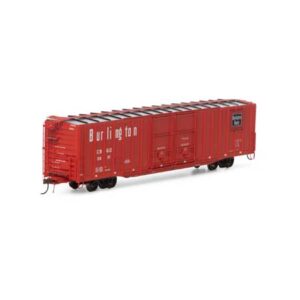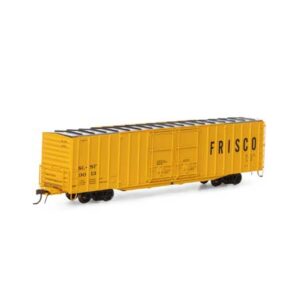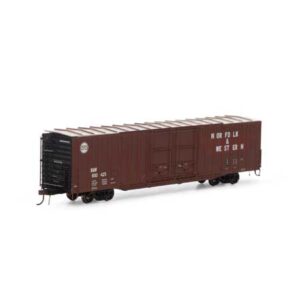

60' Pullman Standard Auto Parts Box Car

Prototype Information

In the early 1960s, the American automotive industry revolutionized its logistics. Manufacturers moved away from small, labor-intensive shipments toward high-capacity transport. Pullman-Standard met this demand by introducing the 60′ auto parts boxcar. They designed these cars specifically to haul heavy, dense components like engines and transmissions. Unlike the massive 86′ High Cube cars built for light body panels, these 60′ variants prioritized weight density. The company reinforced the floors to withstand heavy forklifts. Most cars featured 70-ton or 100-ton trucks to support the immense weight of mechanical parts.

By the mid-1960s, these cars dominated major rail corridors connecting Detroit to North American assembly plants. Pullman-Standard offered various door configurations, emphasizing the double plug-door design. These doors provided a flush interior surface to protect cargo and a wide opening for rapid loading. Eventually, containerization pushed many of these cars into general service or retirement. Today, the Pullman-Standard 60′ car stands as a landmark of the Dedicated Service era. It represents a time when railroads precision-engineered equipment for a single industry.

Showing all 3 results