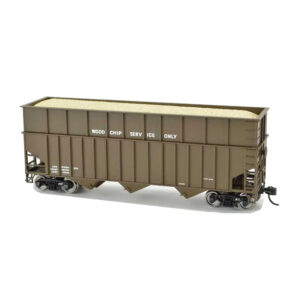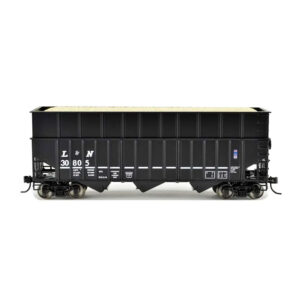

70 Ton Wood Chip Hopper
Prototype Information
Railroads created the 70-ton wood chip hopper by adding tall extensions to standard open-top cars. Wood chips weigh much less than coal or gravel. Because of this, crews needed more volume to reach the car’s weight limit. Maintenance shops bolted plywood or steel sheets to the top of the original sides. This simple modification nearly doubled the car’s capacity for forest products.
These converted hoppers served paper mills throughout the South and Pacific Northwest. Smaller railroads preferred the 70-ton cars because they handled light branch line tracks better than heavy 100-ton equipment. These “hungry board” cars remained the backbone of the chip industry for decades. Eventually, larger purpose-built jumbo hoppers replaced them. Most of these veterans finally retired in the late 1980s due to structural wear.
Showing all 3 results
-
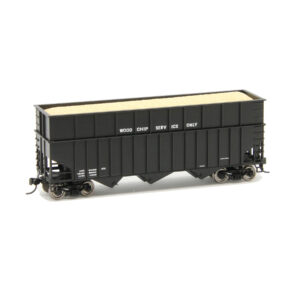
Bowser HO 70 Ton Wood Chip Hopper Data Only “Black, Ribbed Side”
$24.00 Add to cart -

Bowser HO 70 Ton Wood Chip Hopper Data Only “Brown, Ribbed Side”
$24.00 Add to cart -
Bowser HO 70 Ton Wood Chip Hopper Louisville & Nashville
$24.00 Select options This product has multiple variants. The options may be chosen on the product page