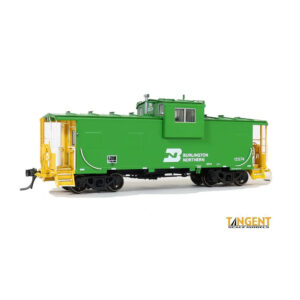

ICC Wide Vision Caboose
Prototype Information
The International Car Company (ICC) introduced the wide-vision caboose in the early 1960s to solve a growing visibility problem. As freight cars became taller and wider, traditional cupolas no longer allowed crews to see past the train. ICC designers responded by extending the cupola sides beyond the width of the car body. This “wide-vision” or “extended-vision” design gave brakemen a clear line of sight down the sides of modern “jumbo” freight cars.
These cabooses became the industry standard for railroads across North America, including the Great Northern and Pennsylvania Railroad. They featured rugged steel construction, cushioned underframes, and modern interior amenities for the crew. By the 1970s, many lines used these cars to replace aging wood or narrow-cupola fleets. Although the end-of-train device eventually replaced them in the 1980s, their sturdy builds ensured a long second life. Many short-line railroads still use them today for switching duties and long backup moves.
Products
Showing all 2 results
-
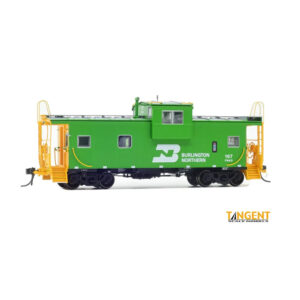
Tangent HO ICC Wide Vision Caboose Burlington Northern “FW&D, Delivery 1971 w/ Red-Green Lights”
$114.00 Select options This product has multiple variants. The options may be chosen on the product page -

Tangent HO ICC Wide Vision Caboose Burlington Northern “WFE Rebuild 1990 w/ FRA Light”
$114.00 Select options This product has multiple variants. The options may be chosen on the product page