40' Modified 1937 AAR Box Car
Prototype Information
The Association of American Railroads (AAR) introduced the Modified 1937 design in the early 1940s to increase cargo capacity. Engineers raised the internal height from 10 feet to 10 feet 6 inches. This change allowed railroads to stack more goods and meet rising shipping demands. Most builders used 4/4 or 5/5 Improved Dreadnaught ends and Murphy panel roofs for these cars. These modifications created a rugged, standardized design that served as a blueprint for thousands of boxcars during the World War II era.
Production continued through the late 1940s as railroads rushed to replace aging wood and early steel equipment. Major lines like the Chicago & North Western and the Erie ordered large batches of this specific design. While 50-foot cars eventually became the industry favorite, these 40-foot veterans remained essential for grain and general freight. Many Modified 1937 cars stayed in active interchange service through the 1960s. Some even lasted longer in secondary or maintenance roles due to their durable all-steel construction.
Showing all 8 results
-

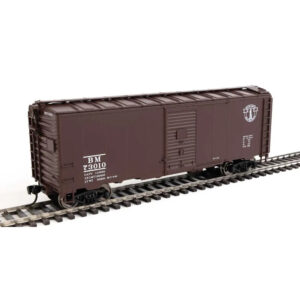
Walthers Mainline HO 40′ Modified 1937 AAR Box Car Boston & Maine
$26.00 Select options This product has multiple variants. The options may be chosen on the product page -
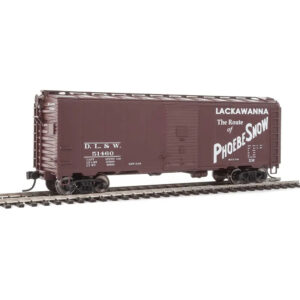
Walthers Mainline HO 40′ Modified 1937 AAR Box Car Delaware Lackawanna & Western
$23.00 Select options This product has multiple variants. The options may be chosen on the product page -
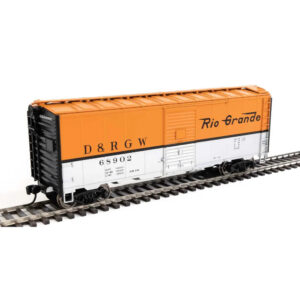
Walthers Mainline HO 40′ Modified 1937 AAR Box Car Denver & Rio Grande “Orange & Silver”
$26.00 Select options This product has multiple variants. The options may be chosen on the product page -
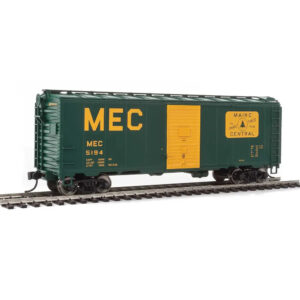
Walthers Mainline HO 40′ Modified 1937 AAR Box Car Maine Central
$23.00 Select options This product has multiple variants. The options may be chosen on the product page -
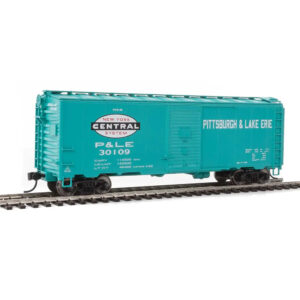
Walthers Mainline HO 40′ Modified 1937 AAR Box Car Pittsburg & Lake Erie
$23.00 Select options This product has multiple variants. The options may be chosen on the product page -
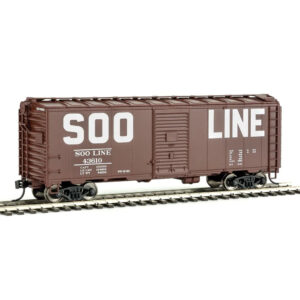
Walthers Mainline HO 40′ Modified 1937 AAR Box Car Soo Line
$20.00 Select options This product has multiple variants. The options may be chosen on the product page -
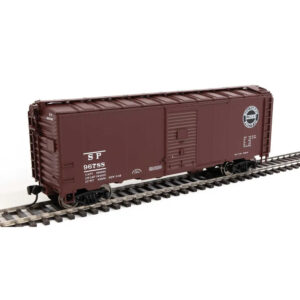
Walthers Mainline HO 40′ Modified 1937 AAR Box Car Southern Pacific
$26.00 Select options This product has multiple variants. The options may be chosen on the product page -
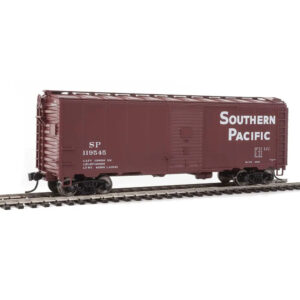
Walthers Mainline HO 40′ Modified 1937 AAR Box Car Southern Pacific “Large Lettering”
$23.00 Select options This product has multiple variants. The options may be chosen on the product page