
40' Steel Reefer
Prototype Information
The 40′ steel refrigerator car revolutionized North American food logistics in the late 1930s. Railroads replaced fragile wood-sided cars with durable all-steel designs to improve insulation and structural strength. Early steel models relied on ice bunkers located at each end of the car. Crews manually loaded blocks of ice and salt through roof hatches at massive icing stations. These cars formed the backbone of the fruit and vegetable trade, safely hauling fresh produce across the continent.
By the 1950s, the 40′ steel reefer underwent a technological shift with the advent of mechanical refrigeration. Onboard diesel-powered cooling units replaced the need for frequent icing stops and maintained precise temperatures for frozen goods. Specialized meat reefers also used this steel frame, adding reinforced floors and overhead rails to support hanging carcasses. While larger 50′ cars and refrigerated trucks eventually took over the market, the 40′ steel reefer remains a cornerstone of rail history. It marks the successful bridge between the labor-intensive age of ice and modern cold-chain logistics.
Showing all 4 results
-
Sale!
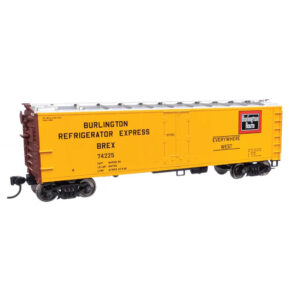
Sale – Walthers Mainline HO 40′ Steel Reefer with Dreadnaught Ends Chicago Burlington & Quincy “BREX”
Original price was: $26.00.$19.00Current price is: $19.00. Select options This product has multiple variants. The options may be chosen on the product page -
Sale!

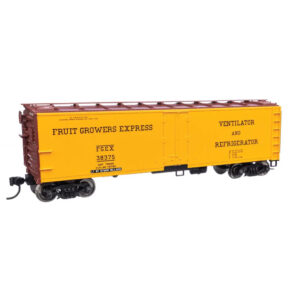
Sale – Walthers Mainline HO 40′ Steel Reefer with Dreadnaught Ends Fruit Growers Express
Original price was: $26.00.$19.00Current price is: $19.00. Select options This product has multiple variants. The options may be chosen on the product page -
Sale!
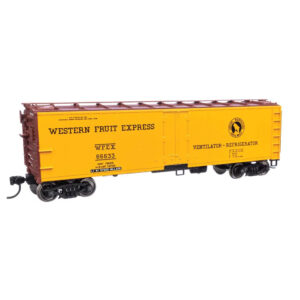
Sale – Walthers Mainline HO 40′ Steel Reefer with Dreadnaught Ends Great Northern
Original price was: $26.00.$19.00Current price is: $19.00. Select options This product has multiple variants. The options may be chosen on the product page -
Sale!
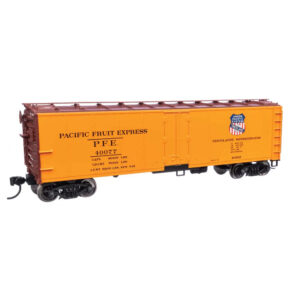
Sale – Walthers Mainline HO 40′ Steel Reefer with Dreadnaught Ends Pacific Fruit Express
Original price was: $26.00.$19.00Current price is: $19.00. Select options This product has multiple variants. The options may be chosen on the product page