

40' Wood Box Car
Prototype Information
The 40-foot wood boxcar became the standard for North American freight in the late 19th century. Railroads moved away from shorter cars to handle more cargo from growing industries. Builders used heavy timber frames and vertical wood siding for these units. They installed iron or steel truss rods under the floor to keep the wood sills from sagging. These cars moved everything from grain and lumber to factory goods across the continent.
By the 1920s, builders added steel frames and bracing to improve car strength. The USRA designs of World War I introduced single-sheathed cars with visible exterior steel “Z-braces.” All-steel designs took over by the late 1930s, yet wood-sided cars worked through World War II. Many lasted into the 1950s on secondary lines or in maintenance service. Eventually, railroads retired the remaining wood fleet as steel construction proved more durable for modern railroading.
Showing the single result
-
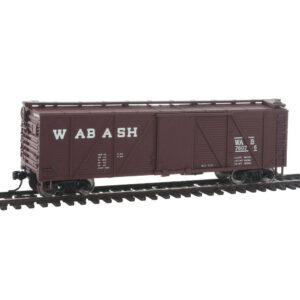
Walthers Mainline HO 40′ Wood Box Car Wabash
$20.00 Select options This product has multiple variants. The options may be chosen on the product page