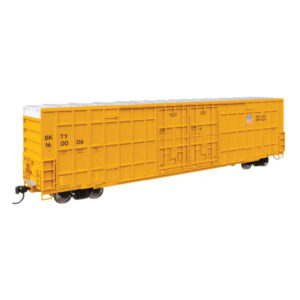
60' High Cube Box Car
Prototype Information
The 7500 and 7550 high cube boxcars emerged in the late 1990s and early 2000s to modernize North American freight. Manufacturers like Trinity Industries and Greenbrier designed these cars to maximize the Plate F clearance profile. Both models stand nearly 17 feet tall and span 60 feet in length. The 7500-cubic-foot car served as an early high-capacity standard for bulky commodities. Shippers in the paper and appliance industries quickly adopted them to move more product per railcar. These cars allowed railroads to compete directly with the rising efficiency of long-haul semi-trucks.
The 7550 high cube refined this design by squeezing an additional 50 cubic feet of space into the same footprint. This version became the definitive modern workhorse for the TTX Company and major Class I railroads. It features exterior-post construction to ensure smooth interior walls, preventing snags on delicate paper rolls or palletized goods. Most 7550 cars utilize high-capacity cushioning units and 12-foot wide plug doors to speed up loading and protect cargo. Today, the 7550 is the most common boxcar on the rails, representing the peak of high-volume industrial shipping technology.
Showing all 6 results
-
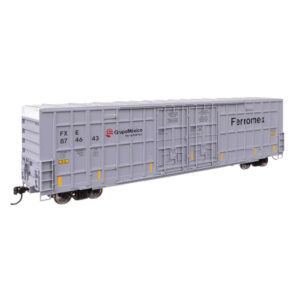
Walthers Mainline HO 60′ High Cube Horizontal Post Box Car Ferromex
$33.00 Select options This product has multiple variants. The options may be chosen on the product page -

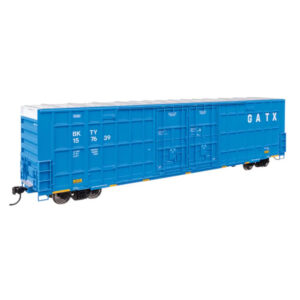
Walthers Mainline HO 60′ High Cube Horizontal Post Box Car GATX “BKTY”
$33.00 Select options This product has multiple variants. The options may be chosen on the product page -
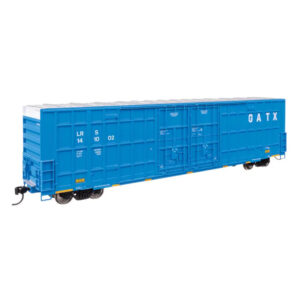
Walthers Mainline HO 60′ High Cube Horizontal Post Box Car GATX “LRS”
$33.00 Select options This product has multiple variants. The options may be chosen on the product page -
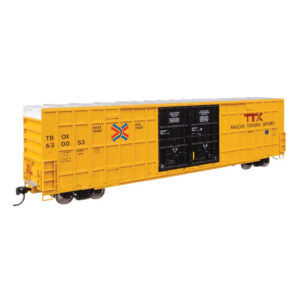
Walthers Mainline HO 60′ High Cube Horizontal Post Box Car Trailer Train “TBOX, High Reporting Mark Red Logo”
$33.00 Select options This product has multiple variants. The options may be chosen on the product page -
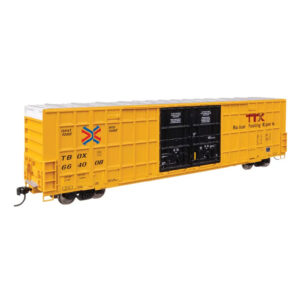
Walthers Mainline HO 60′ High Cube Horizontal Post Box Car Trailer Train “TBOX, Red Logo”
$33.00 Select options This product has multiple variants. The options may be chosen on the product page -
Walthers Mainline HO 60′ High Cube Horizontal Post Box Car Union Pacific “BKTY, High Reporting Mark”
$33.00 Select options This product has multiple variants. The options may be chosen on the product page