
70 Ton AAR Hopper
Prototype Information
The development of the 70-ton AAR standard hopper represents a pivotal era in North American railroading, marking the transition from the lightweight wood-and-steel composite designs of the early 20th century to high-capacity, all-steel units. While 50-ton steel hoppers became commonplace following the 1900s, the Association of American Railroads (AAR) refined the 70-ton design in the mid-1930s—specifically the 1935 AAR Standard—to address the increasing demand for coal and mineral transport. These cars typically featured a triple-hopper configuration, utilizing three discharge bays instead of two to accommodate the greater volume of material while maintaining structural integrity.
Throughout the 1940s and 1950s, the 70-ton hopper became the workhorse of the industry, bridging the gap for rail systems that had previously only supported lighter axle loads. The design evolved to include both offset sides, which maximized interior capacity by placing the side sheets outside the side stakes, and ribbed-side variants that offered greater durability during mechanical unloading. These cars effectively established the gross vehicle weight standards that would define mainline track requirements for decades, remaining the industry benchmark until the widespread adoption of 100-ton cars in the 1970s.
Products
Showing all 8 results
-
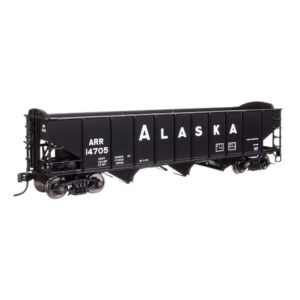
Walthers Mainline HO AAR 70 Ton Hopper Alaska
$32.00 Select options This product has multiple variants. The options may be chosen on the product page -

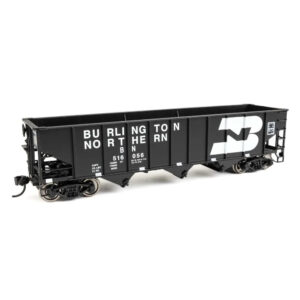
Walthers Mainline HO AAR 70 Ton Hopper Burlington Northern
$28.00 Select options This product has multiple variants. The options may be chosen on the product page -
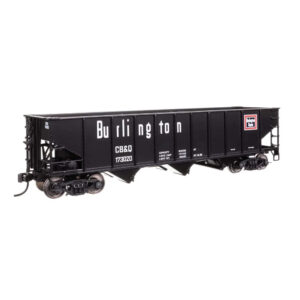
Walthers Mainline HO AAR 70 Ton Hopper Chicago Burlington & Quincy
$32.00 Select options This product has multiple variants. The options may be chosen on the product page -
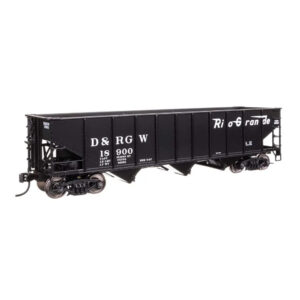
Walthers Mainline HO AAR 70 Ton Hopper Denver & Rio Grande
$32.00 Select options This product has multiple variants. The options may be chosen on the product page -
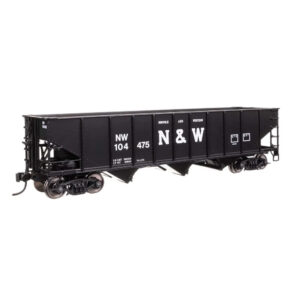
Walthers Mainline HO AAR 70 Ton Hopper Nofolk & Western
$32.00 Select options This product has multiple variants. The options may be chosen on the product page -
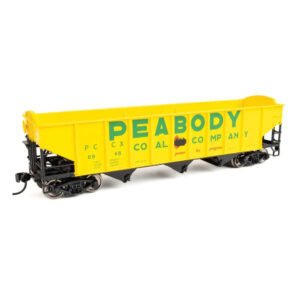
Walthers Mainline HO AAR 70 Ton Hopper Peabody Coal “PCCX”
$28.00 Select options This product has multiple variants. The options may be chosen on the product page -
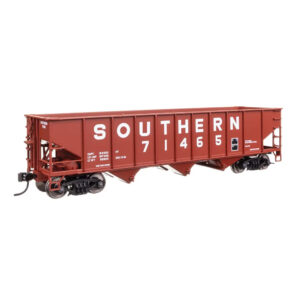
Walthers Mainline HO AAR 70 Ton Hopper Southern
$32.00 Select options This product has multiple variants. The options may be chosen on the product page -
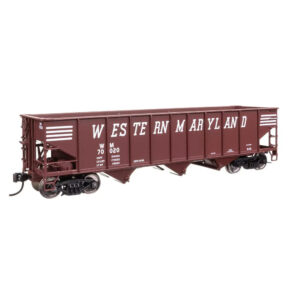
Walthers Mainline HO AAR 70 Ton Hopper Western Maryland
$32.00 Select options This product has multiple variants. The options may be chosen on the product page