
ACF 1958 Covered Hopper
Prototype Information
American Car and Foundry (ACF) introduced this 1,958-cubic-foot covered hopper in the late 1950s. It targeted the transport of dense, heavy materials like cement, sand, and salt. The design utilized a twin-bay configuration and a short 35-foot length. This compact size allowed the car to carry maximum weight without exceeding the weight limits of older bridges and light rail. Unlike earlier designs that used many rivets, the 1958 model benefited from ACF’s advanced welding techniques. These smooth welded seams prevented product buildup and made the car much easier to clean.
The ACF 1958 became a workhorse for the construction and chemical industries throughout the 1960s and 1970s. Most versions featured eight circular loading hatches on the roof to ensure even distribution of heavy cargo. Its rugged steel construction and low center of gravity made it incredibly stable on uneven branch line tracks. As larger 2-bay and 3-bay hoppers entered the market, the 1958 model shifted into specialized roles for dense minerals. Many railroads and private leasing companies maintained these fleets for decades. Their simple, durable engineering kept them in secondary service long after newer designs emerged.
Showing all 7 results
-

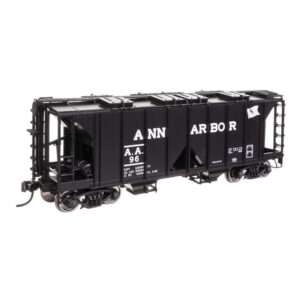
Walthers Mainline HO ACF 1958 Covered Hopper Ann Arbor
$32.00 Select options This product has multiple variants. The options may be chosen on the product page -
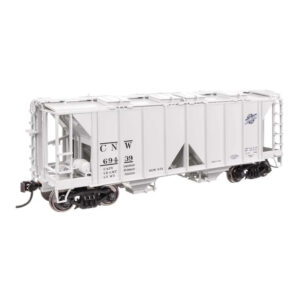
Walthers Mainline HO ACF 1958 Covered Hopper Chicago & North Western
$32.00 Select options This product has multiple variants. The options may be chosen on the product page -
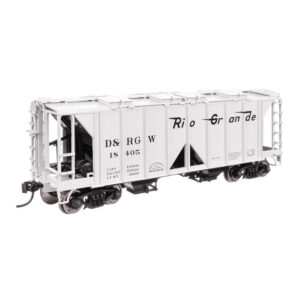
Walthers Mainline HO ACF 1958 Covered Hopper Denver & Rio Grande
$32.00 Select options This product has multiple variants. The options may be chosen on the product page -
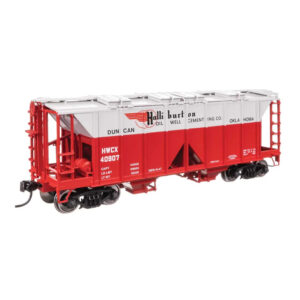
Walthers Mainline HO ACF 1958 Covered Hopper Halliburton
$32.00 Select options This product has multiple variants. The options may be chosen on the product page -
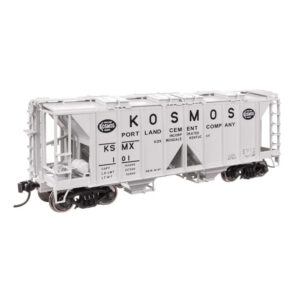
Walthers Mainline HO ACF 1958 Covered Hopper Kosmos Cement
$32.00 Select options This product has multiple variants. The options may be chosen on the product page -
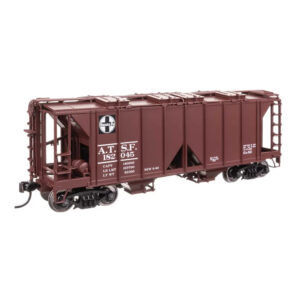
Walthers Mainline HO ACF 1958 Covered Hopper Santa Fe
$32.00 Select options This product has multiple variants. The options may be chosen on the product page -
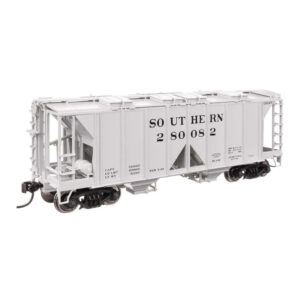
Walthers Mainline HO ACF 1958 Covered Hopper Southern
$32.00 Select options This product has multiple variants. The options may be chosen on the product page