
Bay Window

Prototype Information

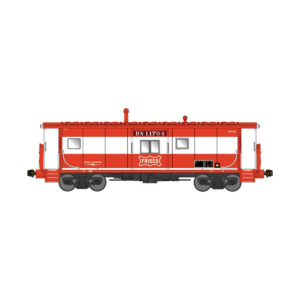
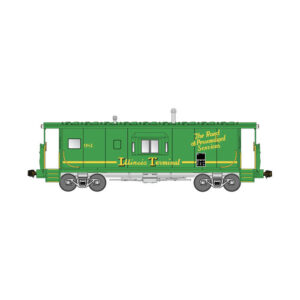
The International Car Company of Kenton, Ohio, emerged in the 1950s as the leading builder of steel bay window cabooses. Railroads had begun moving away from cupola cabooses, since higher freight cars increasingly blocked the crew’s view from the roof. The bay window solved the problem by pushing the walls outward at the midsection of the car, giving crews a clear line of sight along both sides of the train without the clearance concerns of a raised cupola.

ICC refined the design and sold it to a wide range of railroads, making the bay window caboose one of the most common postwar styles in North America. Railroads such as the Southern Pacific, New York Central, and later Conrail became heavy users, while others ordered smaller groups for system-specific needs. The cars carried steel bodies, cushioned underframes, and modern appliances, making them tougher and safer than earlier wood or composite cabooses.

By the 1980s, cabooses of all kinds were being retired as new technologies like end-of-train devices replaced their functions. Still, thousands of ICC bay window cabooses worked into the 1990s, and many survive today in museums, on short lines, or in work train service. Their boxy shape and protruding windows made them iconic, and the design remains a favorite subject for model railroad manufacturers, ensuring ICC’s bay window caboose stays part of railroad history long after the last one left the main line.