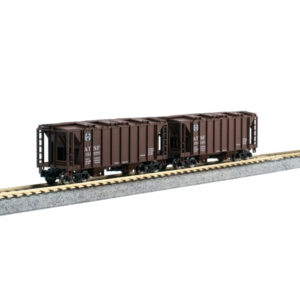

ACF 2 Bay Covered Hopper
Prototype Information
American Car and Foundry (ACF) revolutionized railroading in 1936 with the 70-ton 2-bay covered hopper. This car replaced the slow process of shipping cement and sand in bags. ACF designed a 1,958-cubic-foot body with eight loading hatches and four discharge gates. This configuration set the industry standard for bulk transport. Between 1936 and the late 1950s, ACF built over 21,000 units. Nearly every major railroad bought them, making these cars a common sight during the transition from steam to diesel power.
The car’s popularity encouraged ACF to develop the Center Flow design in the early 1960s. This newer model removed internal supports to speed up unloading. While larger cars eventually took over grain and chemical routes, the original 70-ton hoppers lasted for decades. Many stayed in service through the 1980s. Some railroads repurposed them for maintenance work to carry ballast or traction sand. Today, these cars remain favorites for model railroaders because of their long and versatile history on the tracks.
Showing the single result