40' USRA Wood Box Car
Prototype Information
The United States Railroad Administration (USRA) developed the 40′ wood-sheathed boxcar during World War I to solve a critical equipment shortage. The government took control of the nation’s railroads in 1917 and demanded standardized designs to speed up production. The resulting 40-ton and 50-ton double-sheathed boxcars featured a sturdy steel underframe and steel ends for durability. These cars utilized wood siding to conserve steel for the war effort while maintaining structural integrity. Thousands of these cars entered service across dozens of major railroads, creating the first truly national fleet of standardized freight equipment.
The USRA design proved remarkably successful and influenced freight car engineering for decades. Many railroads continued to build “USRA clones” long after the government returned control to private companies in 1920. These cars hauled a vast range of cargo, from agricultural products to industrial supplies, across the entire North American rail network. While all-steel cars eventually became the industry standard, the USRA wood boxcars remained in active service through World War II. Their longevity and widespread use demonstrated the efficiency of standardized parts and dimensions in rail logistics.
Showing all 11 results
-
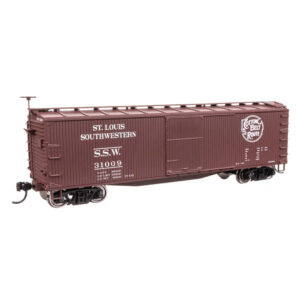
Walthers Mainline HO 40′ USRA Double Sheathed Wood Box Car Cotton Belt
$32.00 Select options This product has multiple variants. The options may be chosen on the product page -

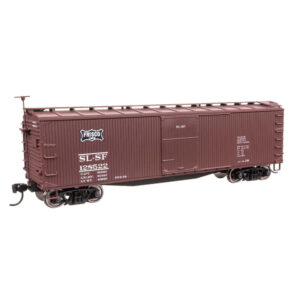
Walthers Mainline HO 40′ USRA Double Sheathed Wood Box Car Frisco
$32.00 Select options This product has multiple variants. The options may be chosen on the product page -
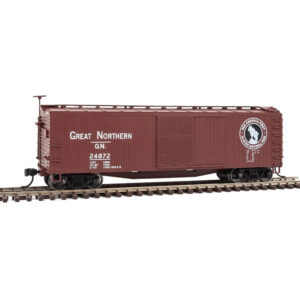
Walthers Mainline HO 40′ USRA Double Sheathed Wood Box Car Great Northern
$23.00 Select options This product has multiple variants. The options may be chosen on the product page -
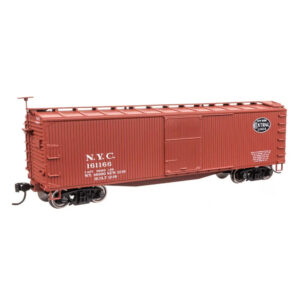
Walthers Mainline HO 40′ USRA Double Sheathed Wood Box Car New York Central
$32.00 Select options This product has multiple variants. The options may be chosen on the product page -
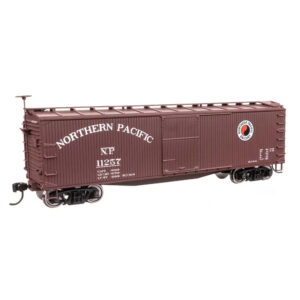
Walthers Mainline HO 40′ USRA Double Sheathed Wood Box Car Northern Pacific
$32.00 Select options This product has multiple variants. The options may be chosen on the product page -
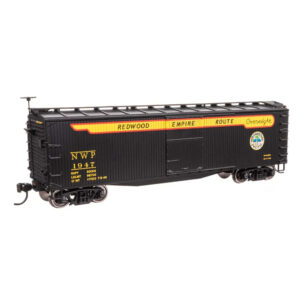
Walthers Mainline HO 40′ USRA Double Sheathed Wood Box Car Northwestern Pacific
$32.00 Select options This product has multiple variants. The options may be chosen on the product page -
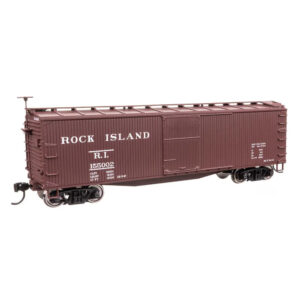
Walthers Mainline HO 40′ USRA Double Sheathed Wood Box Car Rock Island
$32.00 Select options This product has multiple variants. The options may be chosen on the product page -
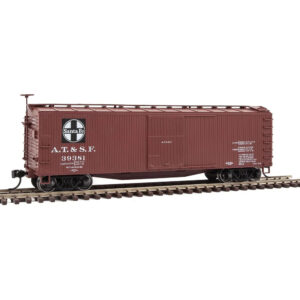
Walthers Mainline HO 40′ USRA Double Sheathed Wood Box Car Santa Fe
$23.00 Select options This product has multiple variants. The options may be chosen on the product page -
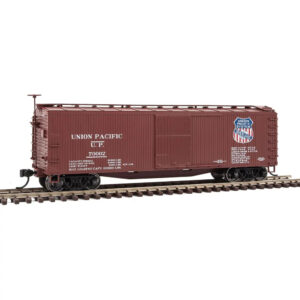
Walthers Mainline HO 40′ USRA Double Sheathed Wood Box Car Union Pacific
$23.00 Select options This product has multiple variants. The options may be chosen on the product page -
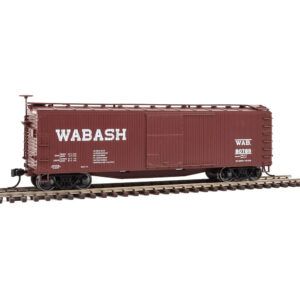
Walthers Mainline HO 40′ USRA Double Sheathed Wood Box Car Wabash
$23.00 Select options This product has multiple variants. The options may be chosen on the product page -
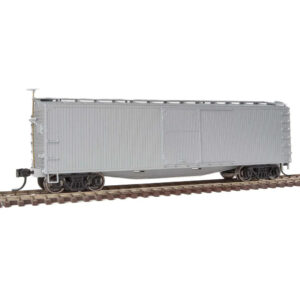
Walthers Mainline HO 40′ USRA Double Sheathed Wood Boxcar Undecorated
$23.00 Add to cart