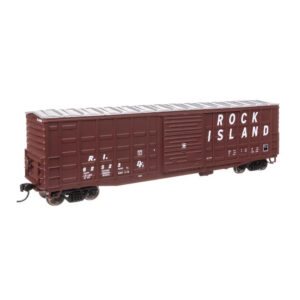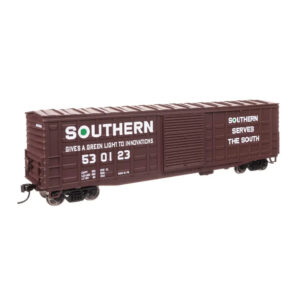
50' Waffle Side Box Car
Prototype Information
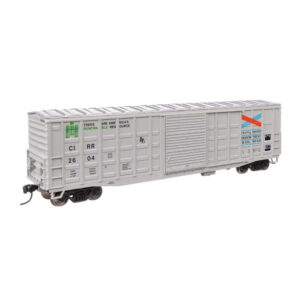
Railroads introduced the 50′ waffle boxcar in the early 1970s to solve a specific cargo security problem. Traditional boxcars required workers to nail wooden blocking and bracing into the floors and walls to keep freight from shifting. This process damaged the car interiors and took significant time. The “waffle” design featured distinctive indentations stamped into the steel side panels. These indentations housed recessed metal bars where shippers could quickly attach crossbars or straps. This system secured loads like paper rolls and appliances without damaging the car itself.
The Evans Products Company and Pullman-Standard became the primary builders of these unique cars. The exterior waffle pattern provided a clear visual cue to warehouse crews that the car was equipped with internal load restraints. Most models featured large 10-foot sliding doors to accommodate heavy forklift traffic. While the rise of cushioned underframes eventually reduced the need for such aggressive interior bracing, the waffle boxcar remained a common sight through the 1990s. Many railroads eventually removed the internal bars but kept the cars in general service for decades due to their rugged, reinforced sides.
Showing all 7 results
-
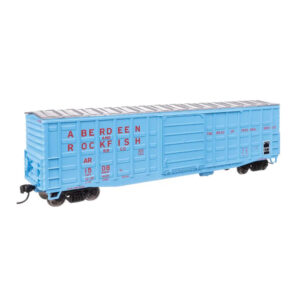
Walthers Mainline HO 50′ Waffle Side Box Car Aberdeen & Rockfish
$32.00 Select options This product has multiple variants. The options may be chosen on the product page -

Walthers Mainline HO 50′ Waffle Side Box Car Chattahoochee Industrial
$32.00 Select options This product has multiple variants. The options may be chosen on the product page -
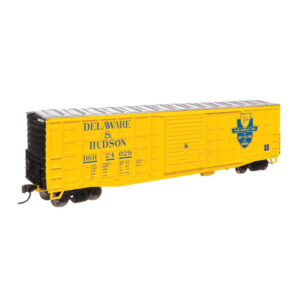
Walthers Mainline HO 50′ Waffle Side Box Car Delaware & Hudson
$32.00 Select options This product has multiple variants. The options may be chosen on the product page -
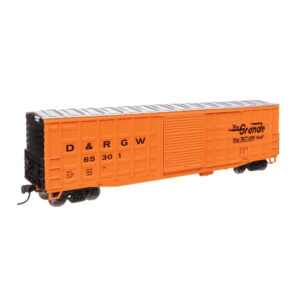
Walthers Mainline HO 50′ Waffle Side Box Car Denver & Rio Grande
$32.00 Select options This product has multiple variants. The options may be chosen on the product page -
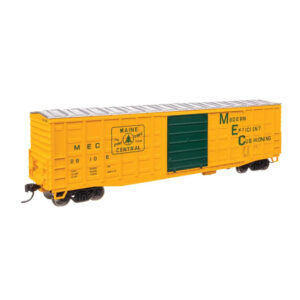
Walthers Mainline HO 50′ Waffle Side Box Car Maine Central
$32.00 Select options This product has multiple variants. The options may be chosen on the product page -
Walthers Mainline HO 50′ Waffle Side Box Car Rock Island
$32.00 Select options This product has multiple variants. The options may be chosen on the product page -
Walthers Mainline HO 50′ Waffle Side Box Car Southern
$32.00 Select options This product has multiple variants. The options may be chosen on the product page