50' AAR Box Car
Prototype Information
The Association of American Railroads (AAR) standardized the 50′ boxcar in the early 1940s to meet the demand for higher cubic capacity. Shippers of bulky goods like furniture and appliances needed more room than standard 40′ cars provided. These cars featured all-steel construction with a 50′ 6″ interior length. They used improved dreadnaught ends and Murphy roofs for better durability. This design allowed railroads to move larger volumes of freight more efficiently during the post-war economic boom.
Railroads introduced the 50′ Improved AAR boxcar in the late 1940s and early 1950s. These cars featured greater interior height and reinforced side sills to handle heavier forklift traffic. Manufacturers also began using welded side panels instead of rivets to reduce weight and maintenance. Many improved models utilized wide 8-foot or 9-foot doors to speed up loading and unloading. This evolution proved so successful that the 50′ car eventually replaced the 40′ car as the standard North American freight car. Thousands of these rugged cars served the rail industry for decades.
Showing all 11 results
-
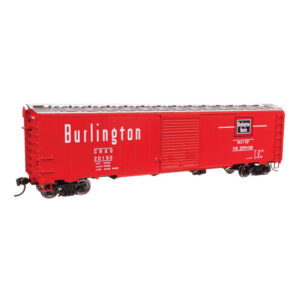
Walthers Mainline HO 50′ AAR Box Car Chicago Burlington & Quincy
$28.00 Select options This product has multiple variants. The options may be chosen on the product page -

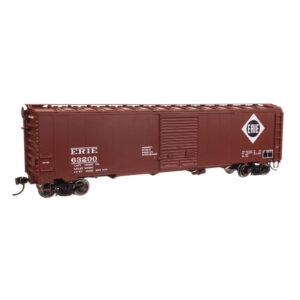
Walthers Mainline HO 50′ AAR Box Car Erie
$28.00 Select options This product has multiple variants. The options may be chosen on the product page -
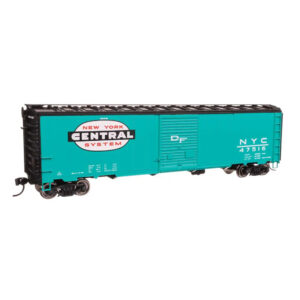
Walthers Mainline HO 50′ AAR Box Car New York Central
$28.00 Select options This product has multiple variants. The options may be chosen on the product page -
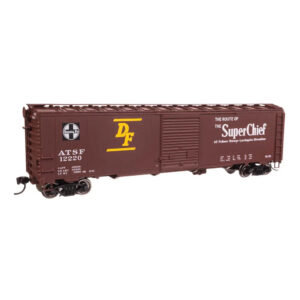
Walthers Mainline HO 50′ AAR Box Car Santa Fe “DF”
$28.00 Select options This product has multiple variants. The options may be chosen on the product page -
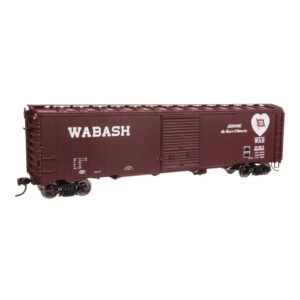
Walthers Mainline HO 50′ AAR Box Car Wabash “Heart”
$28.00 Select options This product has multiple variants. The options may be chosen on the product page -
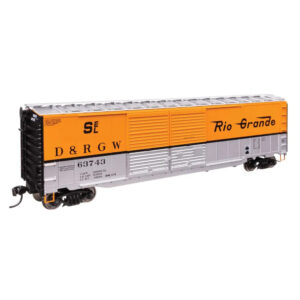
Walthers Mainline HO 50′ Improved AAR Double Door Box Car Denver & Rio Grande
$33.00 Select options This product has multiple variants. The options may be chosen on the product page -
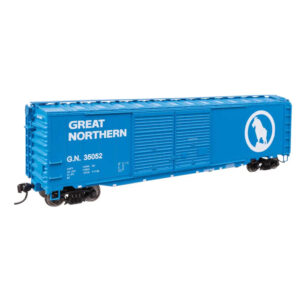
Walthers Mainline HO 50′ Improved AAR Double Door Box Car Great Northern “Big Sky”
$33.00 Select options This product has multiple variants. The options may be chosen on the product page -
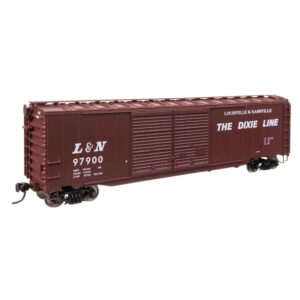
Walthers Mainline HO 50′ Improved AAR Double Door Box Car Louisville & Nashville
$33.00 Select options This product has multiple variants. The options may be chosen on the product page -
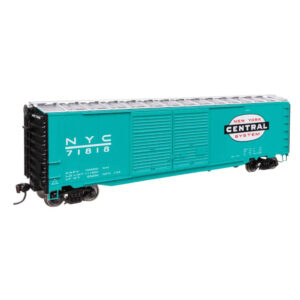
Walthers Mainline HO 50′ Improved AAR Double Door Box Car New York Central
$33.00 Select options This product has multiple variants. The options may be chosen on the product page -
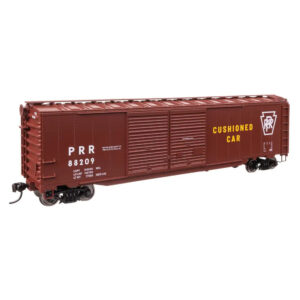
Walthers Mainline HO 50′ Improved AAR Double Door Box Car Pennsylvania “Plain Keystone”
$33.00 Select options This product has multiple variants. The options may be chosen on the product page -
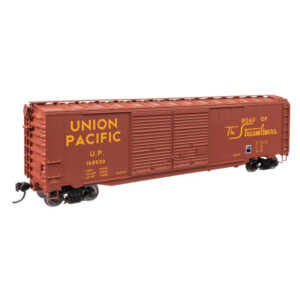
Walthers Mainline HO 50′ Improved AAR Double Door Box Car Union Pacific “Road of the Streamliners”
$33.00 Select options This product has multiple variants. The options may be chosen on the product page